The Right Fuel at the Right Time: A Dog's Nutritional Journey
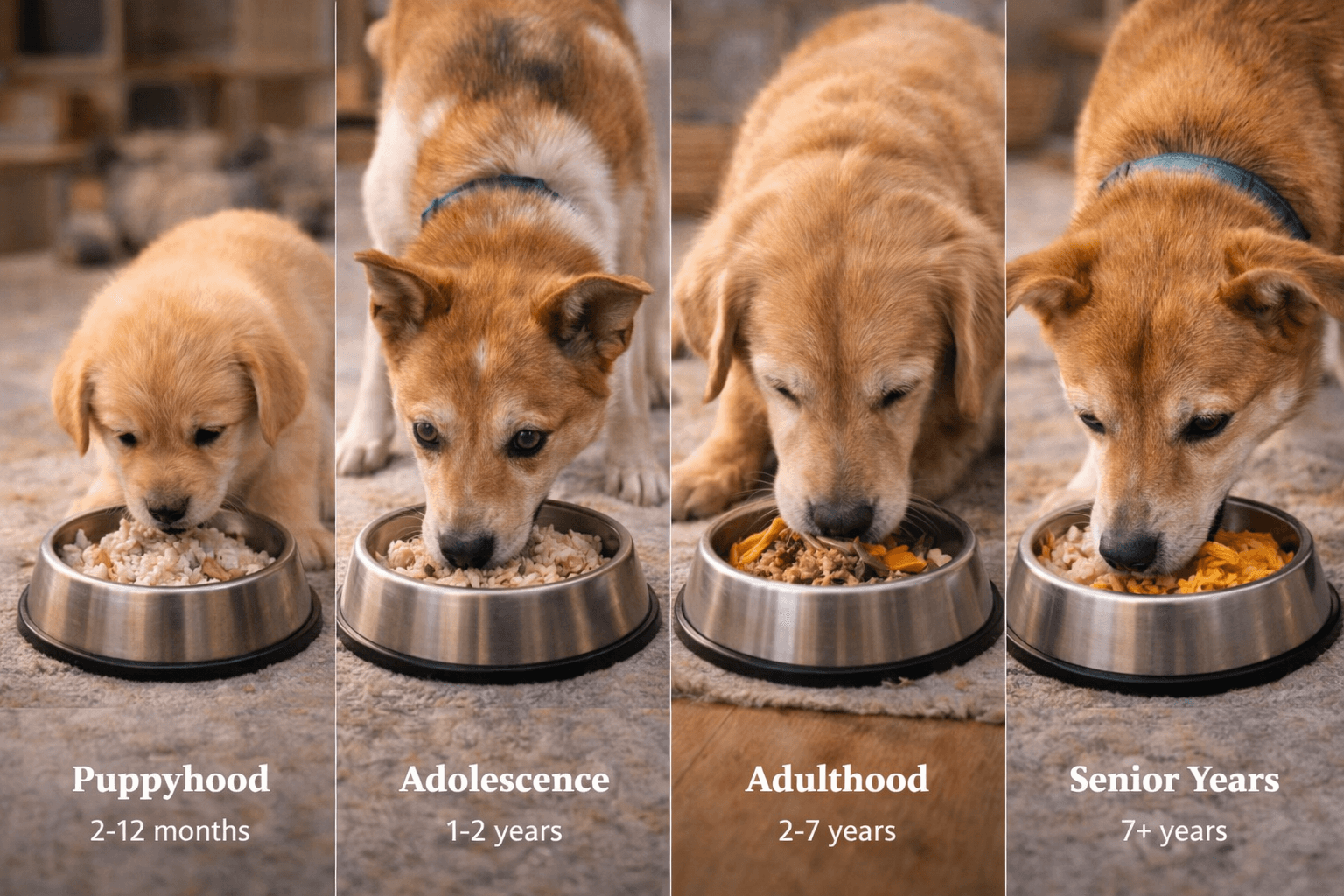
A dog does not "grow up." A dog unfolds. And if you've lived with one long enough, you'll notice something beautiful — their body changes faster than their emotional age. One month they are chewing your footwear. The next, they are guarding your gate like a retired army officer.
But here's the part we often miss in Indian homes: Their nutritional needs change as dramatically as their personalities. Let's walk through it — like a good evening stroll.
Puppyhood (2–12 months): The Infrastructure Phase
This is the "under construction" period. Bones lengthen. Muscles sprout. Teeth fall out. Energy explodes. A puppy is not a small adult dog. It is a biological startup in hyper-growth mode.
What they need: Higher protein (for muscle development), good fats (for brain development), calcium & phosphorus balance (for bones), smaller, frequent meals (3–4 times a day).
In an Indian home: Soft rice + boiled chicken (no masala, no salt), curd rice (plain, minimal curd if tolerated), mashed pumpkin or carrot, well-cooked egg (start small), commercial puppy kibble soaked in warm water.
Avoid leftover sambar rice, oily gravies, or bones from mutton curry. Our food is built for spice tolerance. Their gut is not. This is also when overfeeding creates lifelong joint problems — especially in Labradors and Indies who will eat as if famine is imminent.
Adolescence (1–2 years): The Gym Bro Phase
The body is almost adult-sized. The brain? Not quite. Energy is high. Metabolism is strong. They can digest more variety — but this is where bad habits also set in.
What they need: Balanced protein (not excess), controlled calories, joint support (especially large breeds), structured feeding times (2 meals a day).
In an Indian kitchen: Rice + boiled chicken + a spoon of coconut oil (small quantity), ragi in small amounts for fiber (if tolerated), curd (probiotic support), steamed beans, pumpkin, bottle gourd, rotis broken into pieces and soaked in chicken broth (occasionally).
Avoid parotta pieces, biryani rice, fried snacks, sweets. Yes, even if they stare at you like tragic poets. At this stage, many pet parents confuse enthusiasm with hunger. Not the same thing.
Adulthood (2–7 years): The Stability Phase
These are the steady years. Appetite stabilizes. Energy becomes predictable. The dog now matches your rhythm. This is also where silent weight gain creeps in — especially in apartment dogs in cities where walks are shorter than traffic signals.
What they need: Moderate protein, controlled fat, fiber for gut health, portion discipline.
Indian home meals: 50% rice or millets + 30% protein (chicken, egg, paneer occasionally) + 20% vegetables, fish (boneless, fully cooked) once a week, plain curd, homemade bone broth (strained, no spices).
Salt, chilli powder, garam masala — still a no. Many urban dogs now live with borderline obesity. We think "healthy" means "chubby." It does not. You should be able to feel ribs without pressing hard. That is the test.
Senior Years (7+ years): The Graceful Slowdown
This is when they start sleeping a little longer. Joints whisper. Digestion slows. Eyes soften. Food must become gentler.
What they need: Easier-to-digest protein, lower calories, joint support (omega-3, glucosamine), softer textures.
Indian home options: Soft rice + shredded chicken, light khichdi (no tadka), pumpkin mash, egg whites (less yolk if overweight), slightly warm meals (not cold from fridge).
Hydration becomes critical. Senior dogs often drink less. Adding water or broth to food helps. This is also when emotional nourishment matters. Eating slows. Sitting beside them while they eat matters.
A Word About Indian Households
In many Indian homes, dogs eat: Leftover rice with rasam, milk daily, biscuit treats, chapati with ghee. Some survive. Some thrive. But survival is not the benchmark anymore. We now know better.
Milk is not mandatory. Biscuits are not love. Spice is not harmless. And feeding from the dining table creates a psychological hierarchy confusion that trainers will later charge you to fix.
The Quiet Principle
A dog's bowl should change as its life stage changes. Not dramatically. Not expensively. But thoughtfully. You don't need imported salmon from Norway. You need balance, portion awareness, and less masala.
In an Indian home context, simplicity wins: Boiled, lightly cooked, fresh, measured.
Because ultimately, feeding a dog is not about generosity. It is about stewardship. And growth — like love — needs the right fuel at the right time.