From Whiskered Whispers to Regal Stares: A Cat's Growth Story
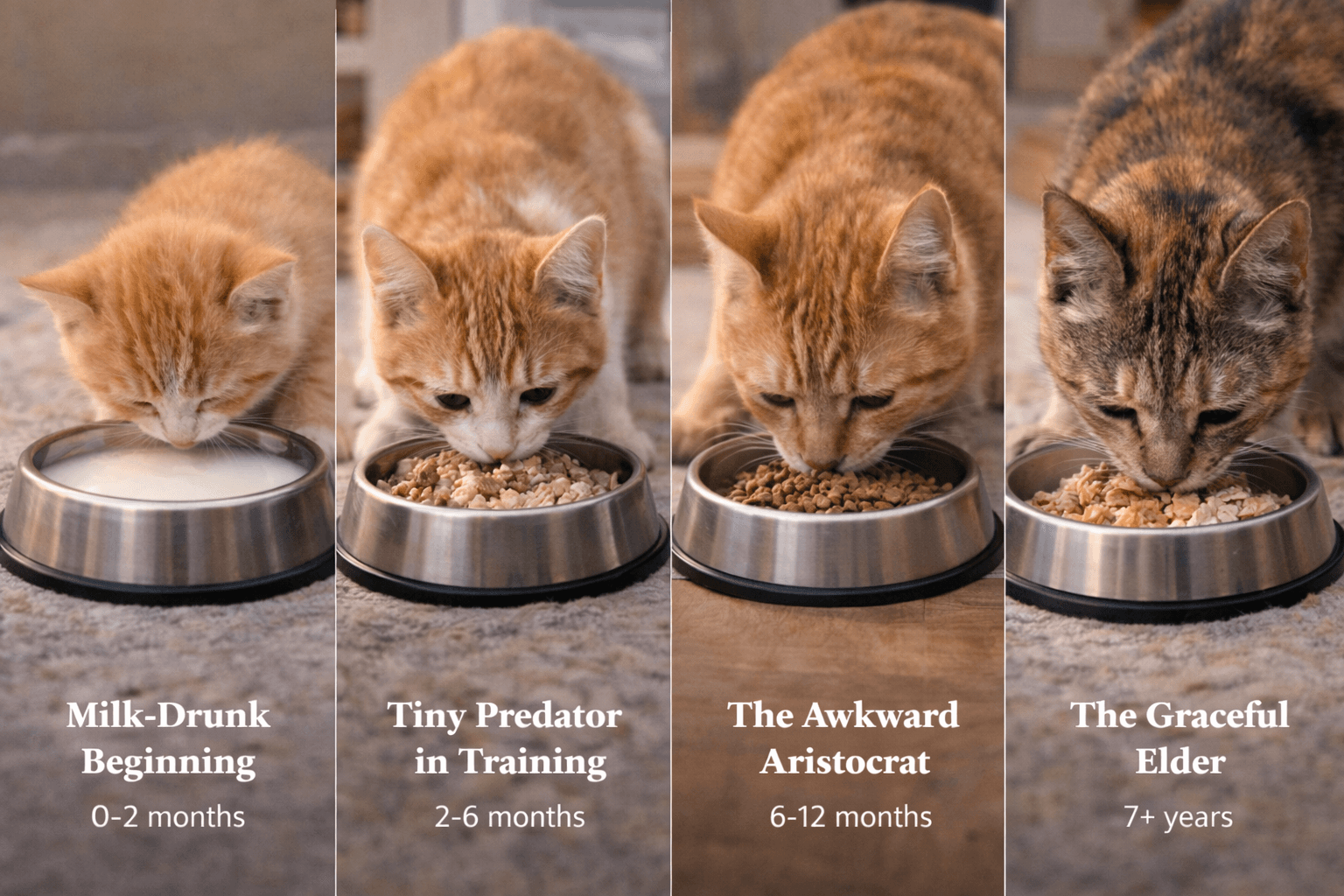
Cats do not grow. They unfold. Quietly. Elegantly. Like a secret you are privileged to witness. And at every stage of that unfolding, their bodies are asking for something different from the bowl you place before them. Let's walk through it — gently, whisker by whisker.
0–2 Months: The Milk-Drunk Beginning
This is the season of wobble and wonder. Kittens are all softness and closed eyes, guided by warmth and instinct.
What's happening: Rapid growth. Brain development. Bones quietly mapping their future strength. Their immune systems borrowing protection from mother's milk.
What they need: Mother's milk is gold. If that's not possible, a proper kitten milk replacer — never cow's milk (their tiny tummies will protest loudly). Protein and fat are not luxuries here; they are architecture. Everything is being built.
2–6 Months: Tiny Predator in Training
Suddenly the wobble becomes a sprint. Curtains tremble. Ankles are ambushed.
What's happening: Explosive growth. Muscle development. Baby teeth giving way to adult ones. Energy levels that defy physics.
What they need: High-protein, high-calorie kitten food. Real animal protein first. Taurine is non-negotiable — cats cannot manufacture enough of it on their own. It protects their heart, vision, and quiet feline dignity.
In an Indian home, some pet parents are tempted to offer bits of roti or rice. A nibble won't harm, but remember — cats are obligate carnivores. Their bodies are designed for meat, not chapati diplomacy. Small, frequent meals work best. Their stomachs are small, but their ambitions are not.
6–12 Months: The Awkward Aristocrat
They look grown. They act dramatic. They are, biologically, still teenagers.
What's happening: Growth begins to slow but hasn't finished. Hormones stir. Personalities sharpen. Some breeds (like larger ones) continue growing well past a year.
What they need: Continue kitten-formulated food until at least 10–12 months. Protein remains essential, but calorie control starts to matter. This is when overfeeding can quietly set the stage for future weight struggles. If neutered/spayed, metabolism may dip slightly. Portions may need thoughtful adjustment — not drastic cuts, just mindful balance.
1–7 Years: The Prime Years
This is the era of confident strides and sunlit naps. They know the house. They know you. They know exactly when to wake you.
What's happening: Maintenance mode. Muscle mass stabilizes. Activity levels differ wildly — some are Olympic gymnasts, others are philosophical observers.
What they need: High-quality adult cat food with strong animal protein content. Controlled fat. Adequate hydration. Wet food becomes especially important here. Cats are historically desert animals; they are poor voluntary drinkers. Moisture in food supports kidney health long-term.
If feeding home-cooked additions (boiled chicken, small bits of fish), ensure they are plain — no salt, no masala, no onion, no garlic. Our food is fragrant; their livers are not impressed. Portion control is kindness. Obesity in cats is heartbreak wrapped in fluff.
7+ Years: The Graceful Elder
The leaps are lower. The naps are longer. The eyes, somehow, are wiser.
What's happening: Metabolism slows. Kidney function may gradually decline. Joints begin negotiating with gravity.
What they need: Easily digestible protein — still crucial, never drastically reduced unless medically advised. Lower phosphorus levels for kidney support. Omega-3 fatty acids for joint comfort. Regular vet checks become part of love. Subtle weight loss or gain matters more now. Texture can matter too. Older cats may prefer softer food if dental changes creep in.
A Gentle Truth About Cats and Food
Cats are not small dogs. They are biologically precise creatures. They require: Animal protein as a primary fuel, taurine, preformed Vitamin A, arachidonic acid. These are not dietary preferences. They are survival requirements.
And while love is abundant in Indian homes — bowls of milk, a saucer of rice, a sharing of curd — a cat's body thrives on species-appropriate nutrition.
The Real Nourishment
At every stage, nutrition is not just about growth. It is about preventing silent suffering years later. Kidney disease. Diabetes. Joint pain. Many of these stories begin quietly in the bowl.
So we feed thoughtfully. We adjust gently. We watch their coat, their eyes, their litter box habits. Because growth in cats is not loud. It is subtle. And so is decline.
To raise a cat well is to notice the quiet things — the way their body changes, the way their appetite shifts, the way their energy settles. And to respond, not react.
From milk-drunk kitten to sun-warmed elder, their needs evolve. Our job is simple. Keep learning. Keep adjusting. Keep loving — in protein percentages and portion sizes as much as in chin scratches.