When Paws Panic: First Responses Every Thoughtful Pet Parent Should Know
There is a particular kind of silence that falls over a home when a dog suddenly isn't quite right. The tail that usually thumps is still. The eyes that sparkle look uncertain. And in that moment, we don't need drama. We need clarity.
This is not a replacement for your veterinarian's wisdom. It is simply a calm first page in the manual of love. Because sometimes the first few minutes matter — and always, your instinct does too. Let's walk gently through common situations, life stage by life stage.
Puppies (0–12 months): Fragile, Fierce, and Still Figuring It Out
Puppies are optimism on four legs. They are also digestive experiments in motion.
1. Sudden Diarrhea or Vomiting Common cause? Something "interesting" from the floor. First response: Withhold food for 6–8 hours (not water). Offer small sips of clean water frequently. If vomiting stops, introduce bland food (boiled chicken and rice, lightly mashed).
Call your vet immediately if: Vomiting persists more than 2–3 times in a few hours. There's blood in stool or vomit. Your puppy seems lethargic or refuses water. Puppies dehydrate quickly. In India especially, parvovirus is a real concern in unvaccinated pups. Do not wait and "see tomorrow" if they are dull. Tomorrow may be too late.
2. Sudden Crying and Limping Likely a minor injury from enthusiastic zoomies. First response: Gently check the paw for thorns or glass. Do not force movement. Apply a cold compress for 5–10 minutes if swelling appears. Vet visit required if: Limping continues beyond a few hours. There is visible swelling, deformity, or persistent pain. Growing bones are delicate. What looks like drama can sometimes be a fracture.
Adolescents & Adults (1–7 years): Strong, Stubborn, Occasionally Silly
These are the dogs who believe they are invincible.
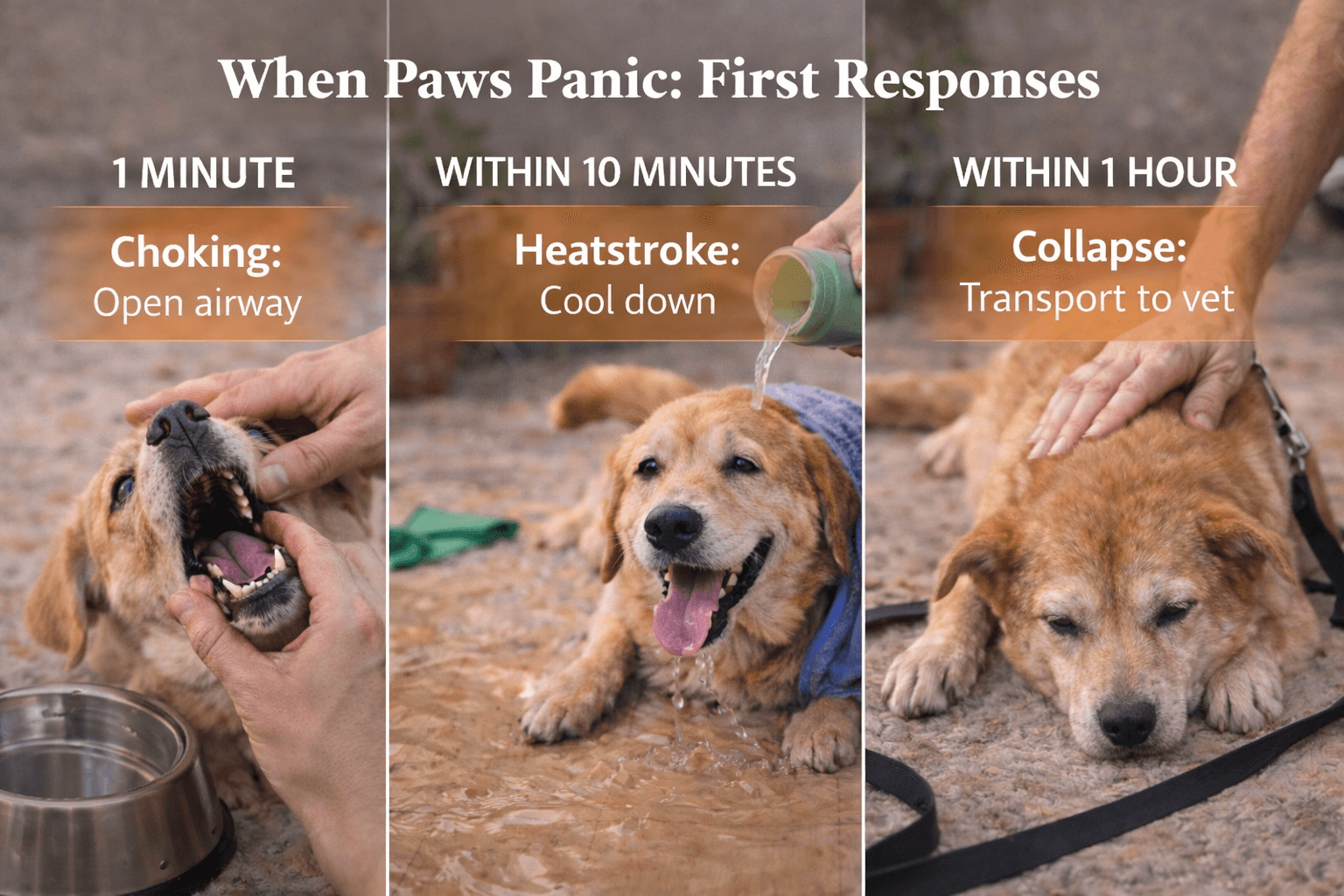
3. Choking or Gagging Perhaps a bone, toy, or overenthusiastic eating. First response: Stay calm. Panic spreads faster than airways close. Open the mouth carefully and check for visible obstruction. If you can clearly see and safely grasp the object, remove it gently. If breathing is severely compromised, seek emergency veterinary care immediately. Do not blindly sweep fingers into the throat — you may push it deeper.
4. Heatstroke (Especially in Indian Summers) Panting heavily. Excess drooling. Weakness. Bright red gums. First response: Move the dog to shade immediately. Pour room-temperature water over body (not ice-cold). Offer small amounts of water to drink. Place cool (not icy) wet cloths on groin and neck. Emergency vet care is mandatory. Heatstroke is not a "rest and recover" condition. Internal damage can continue even after cooling. Avoid ice baths. Rapid cooling can worsen shock.
5. Sudden Allergic Reaction Facial swelling. Hives. Itching. Sometimes vomiting. First response: Remove possible trigger (new treat? new soap?). Contact your vet immediately for dosage guidance before giving any antihistamine. Never guess doses. Rush to emergency care if: Breathing difficulty. Collapse. Pale gums. Allergies can escalate quickly.
Seniors (7+ years): Gentle Souls, Slower Signals
Senior dogs don't always shout when something hurts. They whisper.
6. Sudden Collapse or Weakness This is never "just old age." First response: Keep them lying comfortably. Check gum color (healthy is pink). Keep them warm and transport gently to a vet immediately. Possible causes range from heart issues to internal bleeding. Time matters here.
7. Bloat (More common in large breeds, any adult age) Distended abdomen. Restlessness. Unproductive retching. First response: There is only one: Go to a vet immediately. Do not wait. Do not google longer. Bloat can become life-threatening within hours.
Across All Ages: Seizures — Frightening, But Often Brief
A seizure can feel like the world has tilted. You may see: Sudden collapse, stiffening or jerking limbs, jaw chomping, excess salivation, loss of bladder control. It looks dramatic. It is not always fatal. But it must be handled correctly.
First response: Stay calm. Note the time. Most seizures last under 1–2 minutes. Move furniture away to prevent injury. Do not restrain your dog unless they are in immediate danger (like near stairs). Do not put your hand in their mouth. They are not swallowing their tongue — but they may bite unintentionally. Dim the lights and reduce noise if possible.
After the seizure: Your dog may seem confused, blind, restless, or clingy. This "post-ictal" phase can last minutes to hours. Speak softly. Offer comfort. Allow recovery in a quiet space.
Seek veterinary care immediately if: The seizure lasts more than 3–5 minutes. Multiple seizures occur within 24 hours. Your dog does not regain awareness. This is their first seizure. Seizures can be triggered by epilepsy, toxins, metabolic disorders, or underlying illness. They always warrant veterinary evaluation — even if they stop quickly.
The Universal First-Aid Mindset
Stay calm. Your dog reads you like scripture. Observe before acting. Breathing? Gum color? Responsiveness? Do not medicate without veterinary guidance. Human medicines can be toxic. Have your vet's number saved and an emergency clinic identified in advance.
If your dog is breathing normally, alert, and stable — you may monitor briefly. If your dog is struggling to breathe, collapsing, bleeding heavily, seizing repeatedly, or severely lethargic — this is not an article situation. This is a veterinary situation.
You are not overreacting by seeking help. You are being responsible. Dogs give us a lifetime of uncomplicated love. Our job is not to be doctors. It is to be attentive guardians who respond with steadiness and humility. The best first response is not heroics. It is informed calm — followed, when needed, by professional care. Because reassurance is beautiful. But expertise saves lives.