Nine Lives, One Calm Human: First Responses to Feline Emergencies
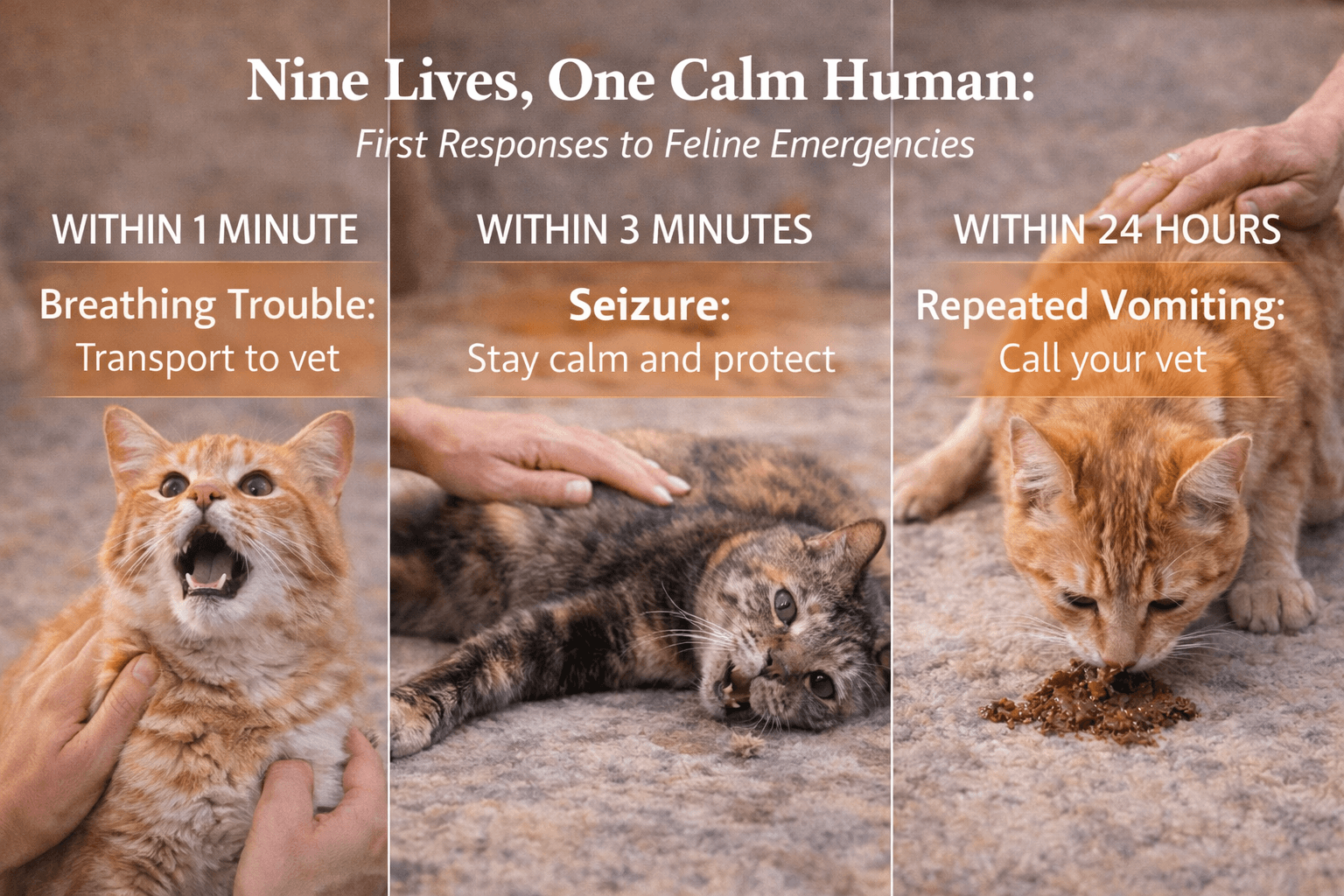
Cats are masters of disguise. They can hide pain like Oscar-worthy actors and then choose 2 a.m. to unveil their plot twist. When something goes wrong, your job isn't to become a veterinarian overnight. Your job is simpler, steadier, and far more powerful: stay calm, act wisely, and know when to hand over the reins to your vet. This is first response, not final treatment. Always involve your veterinarian when in doubt. Cats rarely "just bounce back" from serious symptoms. Let's walk through the common crises — gently, clearly, and without panic.
1. Breathing Trouble: Open-Mouth Breathing, Rapid Panting, Wheezing Cats are not dogs. They do not pant for fun. If your cat is breathing with their mouth open, stretching their neck out, breathing very fast at rest, or their gums look pale or bluish — this is urgent.
First response: Do not force them into a carrier aggressively. Keep the environment quiet and cool. Avoid handling more than necessary. Transport to the nearest vet immediately. Breathing issues can signal asthma, heart disease, fluid in lungs, heatstroke, or trauma. Time matters here. This is not a "wait and watch" situation.
2. Seizures: The Frightening Few Minutes A seizure can look like paddling legs, stiffening, drooling, twitching, or sudden collapse. It is terrifying. But here is your anchor: most seizures stop within 1–3 minutes.
During the seizure: Do not put your hand in their mouth. Cats do not swallow their tongues. Move nearby objects away so they don't injure themselves. Dim the lights. Reduce noise. Time the episode if possible.
After it stops: They may seem confused, blind, restless, or excessively hungry. Stay calm and keep them safe. Call your vet immediately for guidance. If a seizure lasts more than 5 minutes, or multiple seizures happen in a short span, go to emergency care immediately. Even a single seizure warrants a vet visit within 24 hours.
3. Vomiting: One Hairball vs Something More Cats vomit. It's practically a hobby. But frequency and context matter. Watchful waiting is okay if: It's a single episode. Your cat is otherwise bright, eating, and drinking. No blood is present.
Call your vet if: Vomiting repeats more than twice in a day. There's blood or coffee-ground material. Your cat seems lethargic, hides excessively, or refuses food. There's suspicion of toxin ingestion (plants, human meds, chocolate). With kittens and seniors, don't delay. They dehydrate quickly.
4. Urinary Distress: The Silent Emergency If your cat is going in and out of the litter box, straining, crying, or producing little to no urine — this is especially urgent in male cats. A blocked bladder can become life-threatening within 24 hours.
First response: Check if urine is actually being produced. Do not wait overnight. Go to a vet immediately if there is straining with little or no urine. This is one of the true "drop everything and go" emergencies.
5. Trauma: Falls, Bites, Road Accidents Cats are agile, not invincible. After any trauma: Keep movement minimal. Place your cat gently in a carrier with a towel. Avoid pressing on limbs or abdomen. Even if they "seem fine," internal injuries can hide. Always seek veterinary evaluation after major trauma.
6. Bleeding Small cuts: Apply gentle pressure with clean gauze for several minutes. Heavy bleeding: Continuous firm pressure. Immediate veterinary visit. Never use human antiseptics like Dettol or strong alcohol on deep wounds without guidance.
7. Suspected Poisoning Common culprits include lilies, certain houseplants, human painkillers, cleaning products, and essential oils. If ingestion is suspected: Do not induce vomiting unless a vet instructs you. Bring packaging or plant samples with you. Seek immediate veterinary help. Lilies in particular can cause kidney failure in cats — even small exposures are dangerous.
8. Heatstroke Less common in cats than dogs, but possible in hot climates. Signs: Panting. Drooling. Lethargy. Collapse. First response: Move to a cool, shaded area. Offer small amounts of water. Apply cool (not ice-cold) damp cloths to paws and belly. Head to the vet. Rapid cooling is important, but overcooling can cause shock.
9. Choking True choking in cats is rare but serious. Signs: Pawing at mouth. Gagging without producing anything. Distress. Do not blindly sweep inside the mouth. If visible and safe, remove the object carefully. Otherwise, emergency care immediately.
A Gentle Reality Check
Cats deteriorate quietly. By the time they show obvious distress, something meaningful may already be brewing. Your role is not heroics. It is observation.
Notice: Changes in appetite. Hiding behavior. Grooming changes. Litter box habits. Subtle weight loss. These whispers often matter more than dramatic episodes.
The Golden Rule
When unsure, call your vet. No responsible veterinarian will ever mock a cautious cat parent. They would much rather reassure you than treat a preventable crisis.
Cats may have nine lives. But they only have one you to notice when something feels off. Stay calm. Act kindly. Seek help early. And remember — asking for veterinary support is not panic. It is love, properly directed.